
Table of Contents
- How LASIK and ICL Reshape Your Vision Differently
- LASIK vs ICL Candidacy: Who Qualifies for Each
- LASIK vs ICL Recovery: What the Timeline Looks Like
- LASIK vs ICL Risks: Side Effects and Complications
- ICL vs LASIK Cost: What Drives the Price Difference
- A Decision Framework for Choosing Between LASIK and ICL
- Conclusion: Matching the Procedure to Your Eyes
- Frequently Asked Questions
Last Updated: October 4, 2026
How LASIK and ICL Reshape Your Vision Differently
Choosing between LASIK and ICL comes down to one structural fact: LASIK reshapes your cornea, while ICL adds a lens inside your eye. At Clear Vision San Antonio, we walk patients through both options because the right answer depends on your eyes, not on a general recommendation. (Source: the American Academy of Ophthalmology)
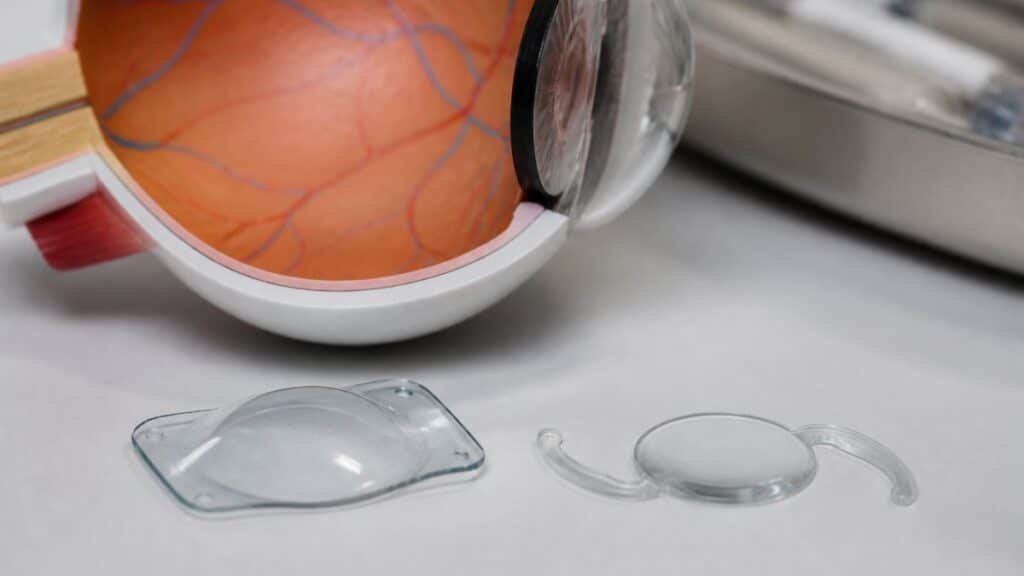
LASIK is a refractive surgery that uses a laser to reshape corneal tissue so light focuses correctly on the retina. ICL, or implantable collamer lens surgery, places a permanent lens inside the eye without removing corneal tissue. According to the American Academy of Ophthalmology, both procedures correct nearsightedness and astigmatism, but they suit different eyes.
LASIK: Reshaping the Cornea With a Laser
LASIK creates a thin corneal flap, then removes microscopic amounts of corneal tissue with an excimer laser. Flattening the cornea corrects myopia; reshaping it in another axis corrects astigmatism. Because the laser removes tissue, your cornea must be thick enough to spare. Results are typically stable, but the change to corneal tissue is permanent and cannot be reversed.
ICL: Adding an Implantable Lens Inside the Eye
ICL leaves the cornea untouched. A surgeon places a small collamer lens behind the iris and in front of your natural lens through a tiny incision. The lens corrects a wide prescription range, including high myopia that LASIK cannot safely treat. Unlike LASIK, an ICL can be removed or replaced later, which matters if your prescription changes or you develop cataracts.
LASIK vs ICL Candidacy: Who Qualifies for Each
Candidacy separates the two procedures more than any other factor, and it is decided by measurements rather than by preference. LASIK suits healthy, adequately thick corneas and moderate prescriptions; ICL suits thin corneas, higher prescriptions, and eyes with specific internal dimensions. A preoperative evaluation confirms which path fits your eyes, and no article, including this one, can substitute for that exam.
Prescription Range and Corneal Thickness Thresholds
LASIK generally works for mild to moderate nearsightedness and astigmatism, and it requires enough corneal thickness to remove tissue safely.
ICL handles a broader prescription range, including high myopia that LASIK cannot safely treat, and it does not depend on corneal thickness because no tissue is removed. Patients with chronic dry eye often tolerate ICL better, since LASIK can worsen dryness by disrupting corneal nerves.
Diagnostic Tests Used in a Preoperative Evaluation
A thorough eye examination measures far more than your prescription. Expect these assessments, and ask for your actual numbers:
- Corneal topography and tomography, maps surface shape and curvature and screens for irregular astigmatism or keratoconus that would rule out LASIK.
- Pachymetry, measures corneal thickness in microns; this is the measurement that most often decides LASIK eligibility.
- Anterior chamber depth, confirms there is enough room behind the iris to place an ICL safely without crowding the natural lens.
- Endothelial cell count, estimates the health of the cornea’s inner cell layer, which affects long-term clarity.
- Intraocular pressure, establishes a baseline, since ICL follow-up watches pressure closely.
These tests determine candidacy and flag conditions that would make either procedure risky. Eligibility varies because anatomy varies: two people with the same prescription can get different answers.
Questions to Ask at Your Consultation
Bring a written list. The answers, not the marketing, should drive your decision:
- What are my corneal thickness, anterior chamber depth, and endothelial cell count, and how do they compare to the thresholds for each procedure?
- Has my prescription been stable, and for how long?
- How many of each procedure have you personally performed, and what are your enhancement and complication rates?
- What is my expected outcome, and what is the realistic range?
- What alternatives exist if I am not a candidate, PRK, refractive lens exchange, or staying in glasses or contacts?
- What does the total cost include, and what would a complication or enhancement add?
Candidacy is a measurement question, not a preference question. Get your numbers in writing, ask how they compare to the thresholds, and let the data narrow the choice before you decide.
LASIK vs ICL Recovery: What the Timeline Looks Like
Recovery favors LASIK on speed, while ICL follows a slightly longer arc. Most LASIK patients notice clearer vision within a day; ICL patients often see well quickly too, but the eye needs more time to settle around the implanted lens.
Day One Through Week One
After LASIK, many patients see clearly within hours and return to normal activities the next day, though glare and halos at night are common early on. After ICL, vision often improves within a day as well, but your surgeon will monitor eye pressure and lens position. Both procedures call for medicated drops and avoiding rubbing your eyes.
One Month and Beyond
By one month, most patients in both groups have stable, functional vision and can resume exercise and swimming. Full visual acuity continues to refine over several months. Follow-up visits track healing, and ICL patients also confirm the lens sits correctly. Long-term, both require routine eye exams, and ICL patients should know the lens may eventually be removed if cataracts develop.
LASIK vs ICL Risks: Side Effects and Complications
Both procedures are well established, but their risks differ in kind, frequency, and reversibility. The honest comparison is not which procedure is risk-free, neither is, but which set of risks fits your eyes and your tolerance for uncertainty. A U.S. Food and Drug Administration overview of LASIK notes that side effects like dry eye and night vision problems can persist for some patients, and that is the standard against which any refractive procedure should be judged.
LASIK Risks
- Dry eye, the most common complaint. The laser disrupts corneal nerves that signal tear production, so dryness can worsen for weeks to months and, in a minority of patients, persist. Mechanism matters: nerves regenerate slowly, and pre-existing dryness predicts a harder recovery.
- Night vision symptoms, halos, glare, and starbursts around lights, especially in low light. These are tied to pupil size and the size of the treated zone, which is why pupil measurement is part of the workup.
- Undercorrection or overcorrection, residual prescription that may require glasses, contacts, or an enhancement procedure.
- Flap complications, rare but specific to LASIK. A flap can wrinkle, become displaced, or develop epithelial ingrowth. This is why rubbing the eye in the early weeks is prohibited.
- Corneal ectasia, rare and the most serious, occurring when too much tissue is removed from a susceptible cornea. Thorough topography and pachymetry screening exist specifically to prevent it.
ICL Risks
- Elevated eye pressure, the implant can affect fluid flow within the eye, so pressure is monitored closely after surgery and at follow-up visits.
- Cataract formation, the lens sits near the natural lens, and in some eyes this proximity accelerates cataract development, particularly in older patients. If a cataract forms, the ICL can be removed and cataract surgery performed.
- Lens positioning issues, the implant can rotate or sit imperfectly, which may require a repositioning procedure.
- Endothelial cell loss, the cornea’s inner cell layer can lose cells over time, which is why anterior chamber depth and cell counts are checked before surgery and monitored afterward.
- Infection and inflammation, uncommon with modern technique but possible with any intraocular procedure.
How Anatomy Changes the Risk Picture
Risk is not a fixed property of a procedure; it is a property of a procedure applied to a specific eye. A thick cornea with a moderate prescription and no dryness carries a very different LASIK risk profile than a thin, dry cornea with a high prescription. Likewise, a shallow anterior chamber makes ICL placement more crowded and raises the stakes on pressure and lens positioning.
Established Evidence vs. Marketing Claims
Be skeptical of absolute statements. “Permanent,” “reversible,” and “risk-free” are marketing words, not clinical ones. LASIK’s corneal change is permanent; ICL’s lens is removable, but removal is itself a procedure with its own risks. Long-term outcomes for both are well documented in the clinical literature, but individual results vary with anatomy, healing, and age. Ask your surgeon to distinguish what is established from what is hoped.
Rubbing your eye in the first weeks after either procedure can dislodge a LASIK flap or shift an ICL. Follow your surgeon’s aftercare instructions exactly, and wear the protective shield at night as directed.
ICL vs LASIK Cost: What Drives the Price Difference
ICL typically costs more than LASIK because it involves a manufactured lens and a different surgical approach. The implant itself adds material cost, and the procedure is more specialized. LASIK pricing varies by technology and surgeon, while ICL pricing reflects the lens and the added complexity of placing it. Because pricing depends on your eyes, the technology used, and your surgeon’s assessment, we recommend requesting a personalized quote rather than relying on online averages.
| Factor | LASIK | ICL |
|---|---|---|
| Relative cost | Lower | Higher |
| Corneal tissue | Removed | Untouched |
| Reversible | No | Yes, lens removable |
| Best for | Healthy, thicker corneas | Thin corneas, high prescriptions |
| Typical recovery | Fast | Slightly longer |
Ask whether the quoted price includes preoperative testing, the procedure, and all follow-up visits. Some quotes bundle everything; others charge separately, which changes the real total.
A Decision Framework for Choosing Between LASIK and ICL
Use your eye measurements, not preference alone, to decide. If your corneas are thick enough and your prescription is moderate, LASIK is usually the simpler path. If your corneas are thin, your prescription is high, or you have significant dry eye, ICL often fits better. If you want the option of reversal, ICL’s removable lens is the deciding factor. Bring these questions to your consultation:
- What is my corneal thickness, and does it clear the threshold for LASIK?
- Does my prescription fall inside the LASIK range, or does it point toward ICL?
- How would each procedure affect my existing dry eye?
- What does the full cost include, and is financing available?
- What does long-term follow-up look like for each option?
Conclusion: Matching the Procedure to Your Eyes
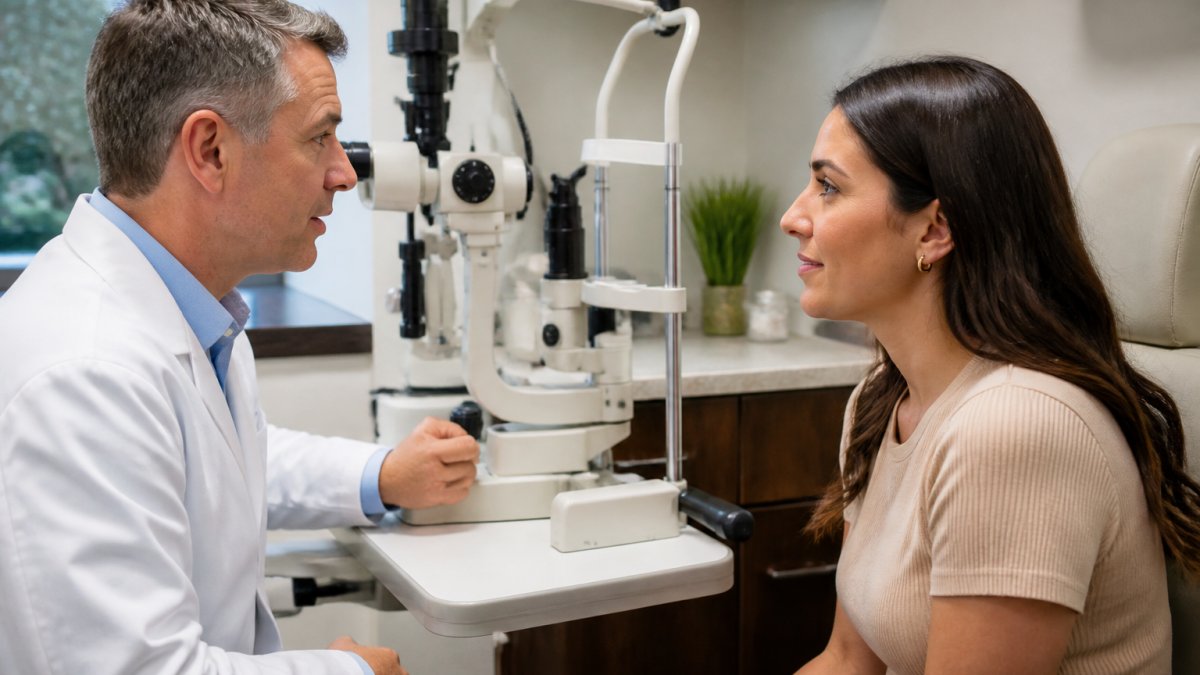
The right choice between LASIK and ICL is the one your eye measurements support, not the one a friend recommended. Corneal thickness, prescription range, and dry eye status all point toward one procedure over the other, and a proper preoperative evaluation makes that clear. At Clear Vision San Antonio, our eye doctors use advanced diagnostic testing to match each patient to the procedure that fits, backed by personalized attention and advanced lens technology.
Frequently Asked Questions
Which is better, EVO ICL or LASIK?
Neither is universally better. LASIK reshapes the cornea with a laser and suits many standard prescriptions with healthy, thick corneas. ICL places an implantable collamer lens inside the eye without removing corneal tissue, which can help people with high myopia, thin corneas, or dry eye who may not qualify for LASIK. The right choice depends on your prescription, corneal thickness, eye health, and lifestyle, so only a preoperative evaluation can confirm which procedure fits you.
Who may be a candidate for LASIK or ICL?
LASIK candidates typically have stable prescriptions, adequate corneal thickness, and healthy corneas. ICL candidates often include people with high nearsightedness, thin corneas, or chronic dry eye that makes LASIK less suitable. Both procedures require a healthy eye examination. Your eye doctor will measure corneal thickness, check for astigmatism and other refractive errors, and review your medical history. A preoperative evaluation is the only way to confirm candidacy for either procedure.
How do recovery and aftercare compare for LASIK and ICL?
LASIK recovery is often faster, with many patients noticing improved visual acuity within a day. ICL recovery may take longer, with vision stabilizing over several days to weeks. Both require follow-up care and medicated eye drops. LASIK patients may experience dry eye during healing, while ICL patients may notice halos or glare at night as the eye adjusts. Your surgeon will schedule follow-up visits to monitor healing and visual outcomes.
Does insurance cover LASIK or ICL?
Most health insurance plans in the United States treat LASIK and ICL as elective procedures and do not cover them. Some vision plans offer discounts or flexible spending account eligibility. Coverage can vary, so check with your insurer and ask your eye care provider about payment options. Because pricing depends on the specific procedure and your eye characteristics, request a quote from your provider rather than relying on online estimates.